
Cabinet Painting vs Replacement: A GTA Kitchen Guide
How to decide whether to paint or replace kitchen cabinets in Toronto-area homes.
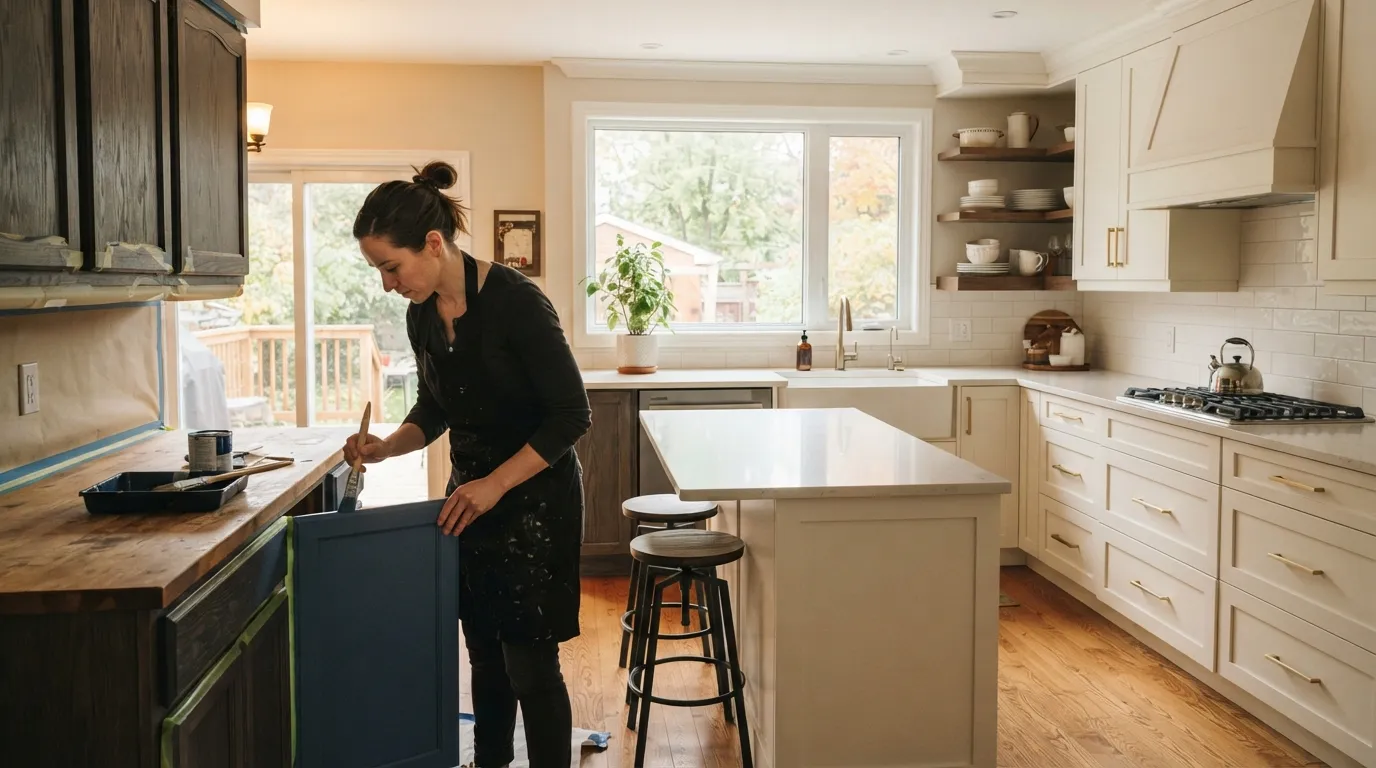
Should I paint my cabinets or replace them?
Choose painting when cabinet boxes are sound and you want a faster, lower-cost visual upgrade; choose replacement when structural damage, outdated layout, or long-term resale value justify the higher cost.
What cabinet painting actually means
Painting is a restoration process that usually involves removing doors and drawers, degreasing, sanding or chemically deglossing, priming, and applying durable topcoats (often acrylic or conversion varnish). Professionals may spray for the smoothest finish; good prep is what makes painted cabinets last.
What replacement involves
Replacement means removing the existing cabinet boxes and installing new ones or refacing with new doors and drawer fronts. It can include layout changes, new hardware, drawer systems, soft-close hinges, and sometimes electrical or plumbing adjustments if the footprint changes.
Typical goals for each option
Painting targets aesthetic refreshes—color, finish, and minor hardware upgrades—without changing storage or layout. Replacement targets functional problems: failing carcasses, warped doors, poor ergonomics, or a planned redesign that alters the kitchen workflow.
Step-by-Step: Cabinet Painting vs Replacement: A GTA Kitchen Guide
This sequence helps you evaluate, plan, and execute either approach in the Greater Toronto Area. Follow these steps to compare cost, disruption, and results.
- 1
1. Inspect the cabinets and define objectives
Check for water damage, soft bottoms, delamination, or warped carcasses; test doors, hinges, and drawer slides. Decide whether your goal is cosmetic only, better function, or a full layout change—this determines the viable options and budget range.
- 2
2. Get realistic cost estimates and timelines
Ask for separate quotes for painting, refacing, and full replacement. In Toronto and nearby Markham or Mississauga, expect painting to be faster (days to 2 weeks) while replacement can take 2–6 weeks depending on custom cabinetry and trades coordination.
- 3
3. Check permits, condo rules, and insurance
If your work alters electrical, plumbing, or load-bearing walls, confirm permit needs with your local building department and condo board rules if applicable; in Ontario, conventions vary so verify locally. For damage repairs related to leaks, notify your insurer early—procedures and documentation affect settlements.
- 4
4. Review contractor credentials and samples
Ask painters for examples of sprayed cabinet finishes and request cabinetmaker portfolios for replacement. Verify references, insurance, and whether specialists (cabinet sprayers vs general painters) will do the work—skills and equipment matter more than a low bid.
- 5
5. Schedule work and prepare the space
Plan for dust containment and temporary kitchen arrangements. For painting, expect door removal, onsite spraying or shop finishing, and reinstallation; for replacement, prepare for demolition noise, trade visits, and possible countertop scheduling.
- 6
6. Final inspection and follow-up
Walk through with the contractor to check door alignment, finish consistency, hardware operation, and caulking. Keep records, warranties, and care instructions—painted finishes and new cabinetry need different maintenance routines.
Mistakes to Avoid
Small choices early in the process can cause big headaches and extra expense. These common mistakes and pro tips will help you avoid surprise costs, long delays, and finish problems.
Skipping proper surface preparation
Failing to thoroughly degrease and degloss or omitting primer is the most common cause of peeling and poor adhesion on kitchen cabinets. Always confirm a contractor’s prep method—chemical deglosser, sanding grit, and type of primer—and ask for a test panel before full application.
Choosing paint type for looks over durability
Interior latex wall paint is not the same as a cabinet-grade topcoat. For kitchens, ask for durable acrylic urethane, conversion varnish, or two-component finishes designed to resist scuffs and frequent cleaning; these cost more but last far longer in a high-use room.
Underestimating hidden damage
Replacing visible doors while leaving failing carcasses will bring disappointment. Inspect underside, backs, and bottoms for moisture, termite evidence, or sagging—if boxes are compromised, replacement or repair is the sensible route, even if doors could be painted.
Hiring the wrong trade for the job
Not every painter is experienced with cabinet spraying, and not every cabinetmaker handles paint finishing well. Look for specialists: cabinet sprayers for painted finishes, and certified cabinet installers for replacements, or a company that coordinates both with subcontractors and guarantees the work.
What Affects Your Outcome
These factors most change whether painting or replacement is the right choice and how smoothly the project runs:
Cabinet condition
Solid carcasses and flat doors favor painting; warped, swollen, or delaminated boxes push toward replacement.
Desired layout changes
If you want to move appliances, add an island, or reconfigure work zones, replacement is usually required because painting doesn’t alter function.
Budget and long-term value
Painting is lower upfront; replacement costs more but can add more resale value, especially when improving layout or replacing low-quality stock cabinetry.
Material and finish expectations
High-gloss, furniture-grade finishes require specialist spraying and curing time; natural wood stains may favor refacing or replacement for consistent grain and durability.
Timing and disruption tolerance
Painting typically completes sooner (often under two weeks); replacement requires coordination with multiple trades and can be disruptive for several weeks.
Local rules, permits, and insurance
Condo boards in Toronto and workmanship regulations in Ontario can affect scheduling and procedures; for insurance claims tied to water or fire, documentation and prompt reporting influence outcomes—always verify locally.
Frequently Asked Questions
How long does a professional cabinet paint job last?
With proper prep and high-quality topcoats, a professional paint job typically lasts 8–15 years before a major refresh is needed, depending on use and cleaning habits. High-traffic kitchens may show wear sooner, while careful maintenance extends life.
Is painted cabinetry as durable as new cabinets?
Painted cabinets can look and perform very well, but they don’t change underlying structural issues. New cabinetry will be stronger, include warranties, and allow layout changes; painted cabinets are a cosmetic and moderately durable solution if the boxes are sound.
Will painting cabinets save money compared to replacement?
Yes—painting is generally the lower-cost option up front. Exact savings depend on material choices and whether professional spraying or specialty finishes are used; obtain multiple quotes and compare scope before deciding.
Do I need a permit to replace kitchen cabinets in Toronto?
Most simple cabinet replacements that don’t alter plumbing, electrical, or structural elements don’t require a building permit in Toronto, but regulations and condo bylaws vary. Confirm with Toronto Building or your condo board to be safe.
Can I live in the house during painting or replacement?
You can usually remain in your home for either job, but expect dust, fumes, and limited kitchen access. Painted finishes may require a few days of low-traffic to cure; replacements may need more disruption if walls, floors, or utilities are worked on.
How should I choose between refacing and full replacement?
Refacing replaces doors and drawer fronts while leaving boxes intact—good if layout and storage are fine and carcasses are solid. Full replacement is the right choice for damaged boxes, layout changes, or if you want higher-end materials and warranties.
Book a free cabinet inspection and paint vs replacement assessment
We’ll evaluate condition, discuss finishes and timelines, and give a no-pressure written estimate for Toronto and nearby GTA neighborhoods.
Get a Free Quote