
Deck Staining in Ontario: Products, Timing and Technique
Choose products, pick the right season, and follow proven techniques for a longer‑lasting deck.
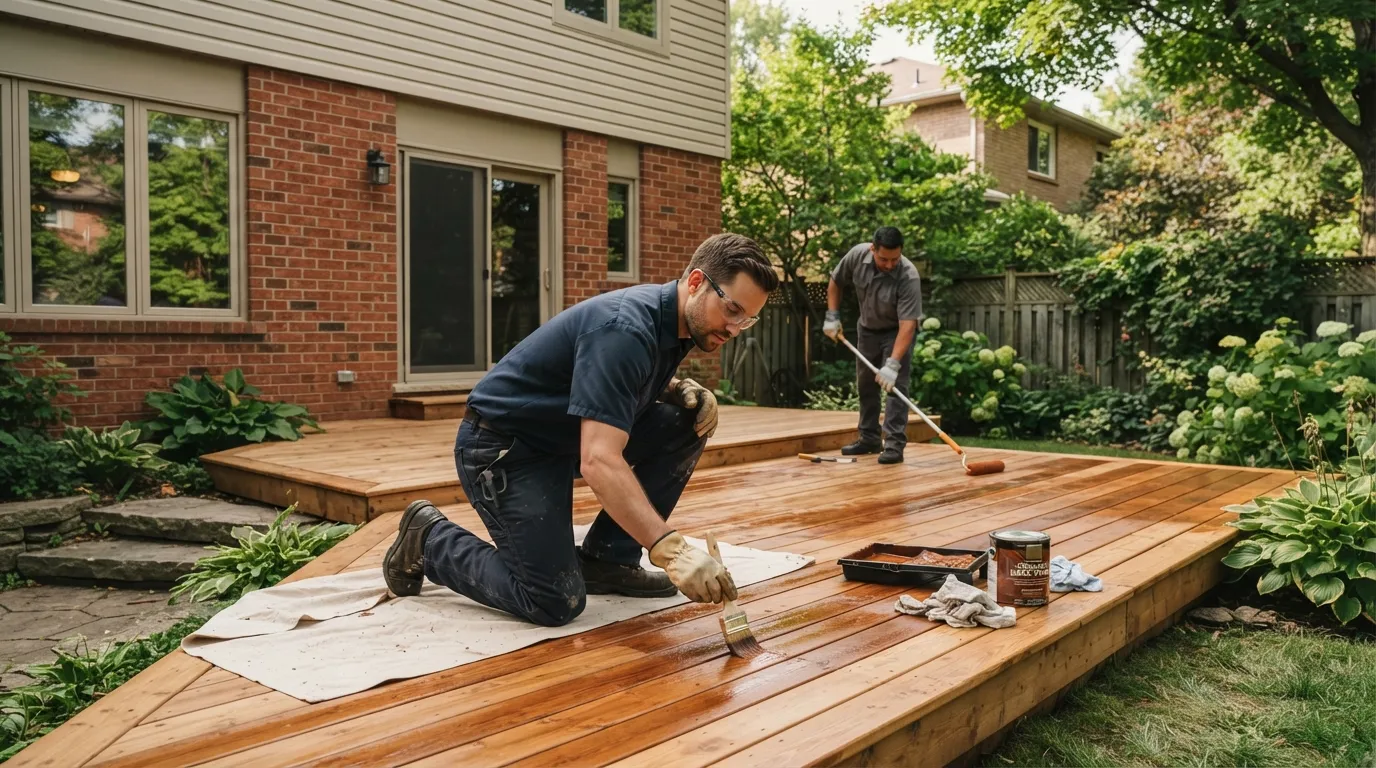
When and how should I stain my deck in Ontario?
Stain your deck when the wood is clean, dry and temperatures are consistently above about 10°C (50°F) for at least 24–48 hours; choose a stain type that matches your wood species and maintenance goals, then follow proper surface prep and application steps for even penetration and adhesion.
Stain types: oil‑based, water‑based, and penetrating oils
Oil‑based and penetrating oil stains soak into wood fibers, providing good water repellency and a natural look on hardwoods and pressure‑treated lumber. Water‑based stains sit more on the surface, resist UV fading better, and clean up with soap and water—useful for decks with heavy sun exposure, especially in open areas of Toronto and nearby Mississauga.
Sheen and opacity choices
Transparent and semi‑transparent stains highlight grain but need re‑coating more often; solid stains hide more and last longer but obscure natural wood. For older or weathered deck boards in Durham Region, homeowners often choose semi‑transparent to balance appearance and protection.
Why moisture control matters in Ontario
Ontario’s seasonal fluctuations—wet springs, hot summers and freeze/thaw in fall—mean you must confirm deck boards are dry; moisture trapped under film‑forming coatings can cause peeling. Measure moisture content with a meter or wait several clear days after heavy rain before staining.
Step-by-Step: Deck Staining in Ontario: Products, Timing and Technique
This sequence walks you from inspection through final cleanup. Each step includes practical checks and local considerations for Toronto and surrounding municipalities—verify municipal bylaws or condo rules if you live in a stacked or common‑area building.
- 1
1. Inspect and plan
Walk the deck to note loose boards, rusted fasteners, existing finish condition and drainage. In Toronto (City of Toronto, Peel, or York Region properties nearby) also check for nearby landscaping or water runoff that can increase wood moisture.
- 2
2. Clean the surface
Remove furniture and sweep thoroughly, then use a deck cleaner or diluted oxygen bleach to remove algae, mildew and old surface contaminants. Rinse and allow 24–48 hours to dry—longer in shaded, north‑facing parts of the deck.
- 3
3. Repair and replace
Replace severely rotted boards, tighten or replace corroded screws and sand splintered areas. Use stainless or hot‑dip galvanized fasteners for pressure‑treated lumber to limit staining and corrosion in Ontario’s humid summers and salty roadside areas.
- 4
4. Test and choose stain
Try a small, hidden test patch to confirm colour and adhesion, and review product labels for application temperature limits—many require 10–30°C. Consider local sun exposure: decks in central Toronto with strong afternoon sun need better UV resistance.
- 5
5. Apply stain correctly
Work with a brush, pad or low‑pressure sprayer, keeping a wet edge and back‑brushing sprayed areas to ensure penetration. Apply thin coats—two thin coats are better than one heavy coat—and avoid staining right before rain or freezing nights.
- 6
6. Cure, inspect, and maintain
Let the stain cure per manufacturer instructions before foot traffic and furniture return; for many products this is 24–72 hours. Inspect annually for wear in high‑traffic zones and plan touch‑ups every 1–4 years depending on stain opacity and exposure.
Mistakes to Avoid
Skipping proper prep or applying the wrong product are the two most common mistakes that shorten a deck’s lifespan. Below are frequent errors homeowners make and practical ways to avoid them.
Applying stain to a damp or dirty surface
Moisture or organic residue prevents stain from penetrating and causes uneven colour and early peeling. Always clean, rinse thoroughly, and confirm boards are dry with a moisture meter or by waiting for several dry, sunny days.
Using the wrong product for the wood or exposure
A heavy, film‑forming stain on softwood in a shaded, wet area can peel as moisture cycles through the boards. Match stain type and opacity to your wood (cedar, redwood, pressure‑treated pine) and to its sun/wind/rain exposure—semi‑transparent oil stains often perform well on most backyard decks in Toronto.
Skipping fastener and structural check
Staining hides fastener corrosion and small rot until they become big problems. Tighten or replace fasteners with corrosion‑resistant hardware and repair any structural issues before staining to avoid wasting time and money.
Overapplying stain
Heavier coats don’t always mean better protection—excess can remain tacky and attract dirt. Apply thin, even coats and back‑brush to force stain into end grain and gaps for consistent performance.
What Affects Your Outcome
Several practical factors change how long a deck stain lasts and how well it looks.
Weather and season
Staining windows where temperatures are too low or rain is likely will reduce adhesion and cure—spring and summer windows in Toronto are usually best, but always check local forecasts.
Wood species and age
Hardwoods like ipe or cedar absorb and react to stains differently than pressure‑treated pine; older, greyed boards may need brightening or light sanding before accepting stain.
Product selection
Different brands and formulations have different UV resistance, water repellency, and required maintenance intervals; read labels and pick a product rated for exterior decking.
Surface preparation quality
Thorough cleaning, removal of mildew, and sanding of rough patches directly affect adhesion—poor prep equals short life for the finish.
Application technique
Brushing and back‑brushing versus spraying only, working in the shade vs. direct sun, and coat thickness all change appearance and durability.
Maintenance and traffic
High‑traffic paths, barbecue areas, and pet activity wear finishes faster; regular spot maintenance and seasonal cleaning extend service life.
Frequently Asked Questions
How often do I need to restain my deck in Ontario?
It depends on stain opacity and exposure. Transparent and semi‑transparent stains typically need attention every 1–3 years, while solid stains can last 3–5 years; high sun or heavy wear zones will need touch‑ups sooner.
Can I stain over an old stain or paint?
You can in some cases, but only if the existing finish is well adhered and cleaned—otherwise you must remove loose material. Test adhesion and do a small trial patch before committing to full‑deck application.
Is it better to pressure wash before staining?
Pressure washing is an effective cleaning method but use moderate pressure to avoid lifting wood fibers. Follow with a deck cleaner or brightener as needed, then allow sufficient drying time before staining.
Which fasteners should I use when replacing deck boards in Toronto?
Stainless steel or hot‑dip galvanized screws are recommended for longevity with pressure‑treated lumber to resist corrosion in Ontario’s climate. Avoid ordinary steel which can stain the wood and corrode faster.
Do I need a permit to replace decking boards or stain my deck in Toronto?
Minor repairs and staining normally don’t require a building permit, but structural changes like enlarging a deck or changing guardrails might. Regulations vary by municipality—verify with the City of Toronto or your local building office and check condo rules if applicable.
What’s the best time of day to stain?
Aim for morning to mid‑afternoon when temperatures are steady and the surface is cool to the touch; avoid direct midday sun that can cause quick drying and lap marks, and never stain within a few hours of expected rain or overnight freezing.
Free deck inspection and product recommendation
Schedule a quick on‑site or photo inspection for tailored product and timing advice for Toronto‑area decks.
Get a Free Quote